What is a High Resolution Photo, and How Much is too Much?
Published on: October 09, 2025
Updated on: October 20, 2026
Share
What is a high resolutionphoto, and when does more resolution stop helping? Learn the balance between clarity, file size, and practical use in photography, along with our recommendations for better-looking photos.
Introduction:
Whether you are a skilled photographer, a pro filmmaker, a casual smartphone user, or a designer, you might be quite sensitive to the term resolution. While this term is not an absolute science, it can give you a general idea of what you’re dealing with at a glance when witnessing a picture or a video.
In the real world, the term high resolution is very commonly used and is a broad term that refers to something that showcases a large amount of detail. This terminology can apply both to images and photos and is also extended to other information formats like audio and video. In all these cases, we are primarily talking about the overall quality of something.
What Is the Resolution of a Photo?
A photo’s resolution is the number of pixels it contains, usually written as width × height (for example, 6000 × 4000) or as megapixels (6000 × 4000 = 24 million pixels, or 24MP). The more pixels a photo has, the more detail it can hold, and the larger it can be printed or cropped before it starts to look soft or pixelated.
You will also see PPI (pixels per inch) and DPI (dots per inch). These terms describe how densely those pixels are packed when the image is displayed or printed, not how much detail the photo contains. The same 24MP file printed at 8 × 10 inches comes out at around 600 PPI, while printed at 20 × 30 inches it drops to about 200 PPI. The pixels haven’t changed; they have just been spread over a larger area. Changing the PPI value in an editing program without adding pixels doesn’t add any detail.
DPI does matter when you scan old prints. Here, a higher scanning DPI captures more pixels from the physical photo, which is why people scan at the highest setting they can to keep as much detail as possible.
What Is a High Resolution Photo?
There is no official cut-off, but today a photo of around 12 megapixels or more (roughly 4000 × 3000 pixels) is generally considered high resolution. That is enough to fill a 4K screen and to make a sharp print of about 13 × 10 inches at 300 PPI, which is the common standard for high-quality printing.
In practice, resolution varies widely by device. A Full HD frame of 1920 × 1080 pixels is only about 2MP. Most modern smartphones capture 12MP (4000 × 3000 pixels) by default. Full-frame mirrorless and DSLR cameras typically start at 24MP (6000 × 4000 pixels) and go well beyond 45MP on high-resolution models.
A simple way to check whether a photo is large enough to print is to divide its pixel dimensions by 300. A 6000 × 4000 image, for example, prints at about 20 × 13 inches at 300 PPI.
Why is High Resolution a Desired Feature?
1. Everyone needs Optical Clarity
Photography is about capturing details; the more information in your image, the better the perceived quality. The higher the resolution, the more information you have preserved in your image to be observed. For example, product photography or macro shots require ultra-high resolution to capture tiny details like small corners, fibers, or sharp cuts.
2. Needed for Prints
Professional printing, especially for billboards and other marketing media, requires fine detail in the images. This is where pixelation can become a real issue and must be avoided at all costs with high DPI.
3. Meeting Professional Standards
In today’s photography and videography landscapes, clients usually demand ultra-high resolution to have the flexibility to scale down the content later while retaining the original quality as a master copy. High resolution is now essentially a standard part of delivering professional-grade work.
4. Flexibility in Editing
High resolution, both in video and photos, gives you flexibility in editing, like cropping out unwanted elements or optimizing the frame. This also affects the results of color grading, white balancing, and other tweaks editors need to make.
What is a High Resolution Photo in the Real world?
As mentioned above, such a photo will be atleast 300DPI, but such standards change according to different use cases. For example, the standard resolution is typically around 72 PPI for web and screen applications. This is implemented on screens with resolutions ranging from 1920 x 1080 pixels to 1366 x 768, 1440 x 900, and even 3840 x 2160, which is 4K UHD by today’s standards. For printing, you will need at least 300 PPI for a quality impression that will translate to 2400 x 3000 pixels.
How Much Resolution do you actually need?
It is a common misconception that the higher the pixels, the better, but that is not always true. In fact, there is a certain break point in how much resolution is helpful for each application, especially in photography and videography, as higher pixels demand more space and processing power on digital systems. In practical terms, the need for resolution depends on the context and application.
For example, 12 to 20MP is more than enough for social media posting. Professional printing of small to medium sizes requires 20 to 30MP with the flexibility to crop, but it demands 30 to 50MP when dealing with high-end work like catalogs, ads, and posters. This number climbs to 50 to 80MP when shooting and printing large-format and Fine-Art Printing. In today’s photography and video standards, you will find 24 to 45MP as a sweet spot for clarity and manageable workflow.
Best Lens for High-Res Photos with Character
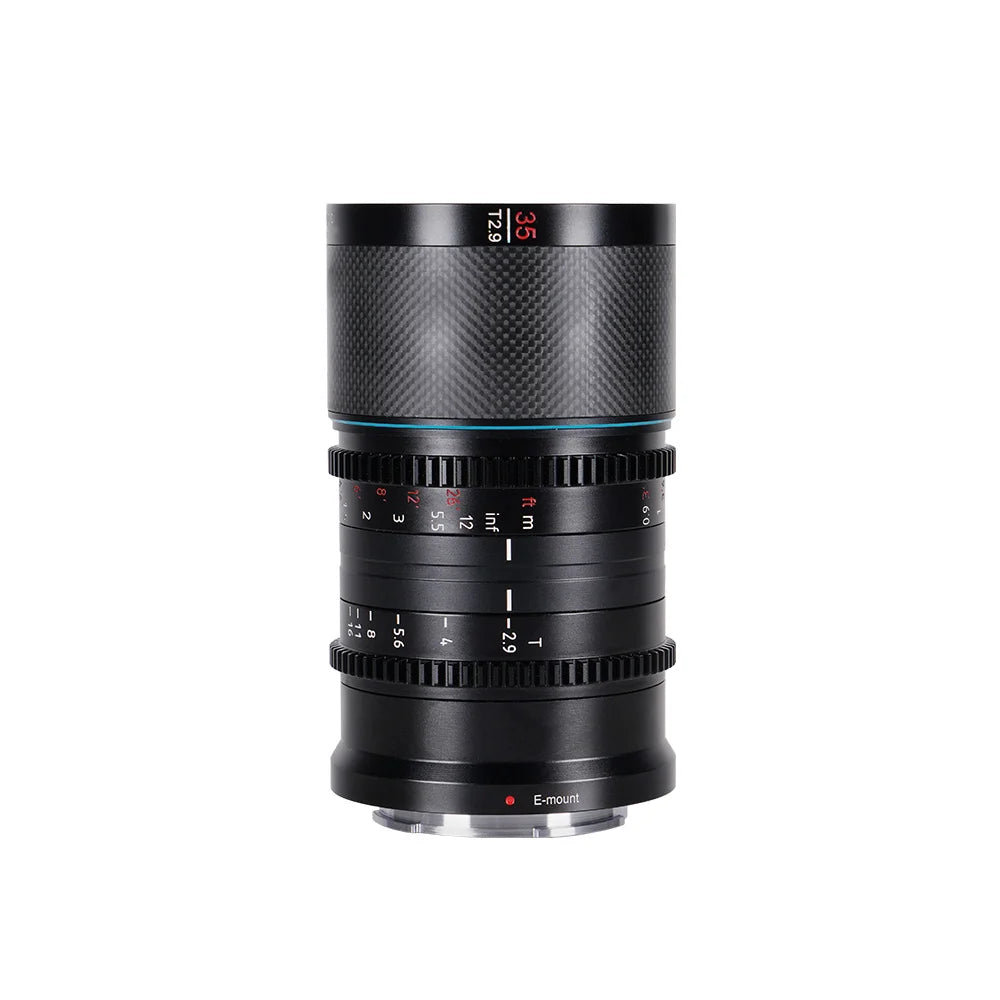
The SIRUI Saturn 35/50/75mm Full-frame Carbon Fiber Anamorphic Lens is designed to meet current professional resolution standards with its next-generation optics. This lens kit works with your camera body to capture ultra-high detail in a 1.6x squeeze frame ratio with character, thanks to its anamorphic characteristics, lens flares, and super-smooth bokeh behind the subject.
Its T2.9 aperture ensures excellent low-light performance, and its full-frame anamorphic design optics deliver frame-to-frame retention of details. This makes it an excellent choice for filmmakers and high-end photographers who want professional results without breaking the bank.
Wrapping Up:
What is a high-resolution photo, and how much high resolution do you actually need? This is a common question. While a high-resolution image, typically 300 DPI (dots per inch) or higher, is sufficient for most people, there are specific applications where even higher DPI is needed. The SIRUI Saturn lens kit is fantastic for more professional-looking images and videos.