


A bird's eye view shot is a camera angle filmed from directly above the subject, usually at about 90 degrees. From this top down position, the street becomes a map, people become small shapes, and every movement traces a line across the frame. It is the most extreme downward angle among the essential camera angles in film. This guide covers how it differs from overhead and aerial shots, why filmmakers use it, and how to film one.
What Is a Bird's Eye View Shot?
A bird's eye view shot is filmed with the camera positioned directly above the subject, pointing straight down at roughly 90 degrees. It is also called a top shot and is sometimes called a God's eye view, because it shows the scene from a perspective no character in the story can share.
The key to the bird's eye view angle is that it is vertical. The horizon disappears, and people, furniture, and streets flatten into graphic shapes. It describes an angle rather than a shot size or camera height, so it can be a wide shot of a city block or a close-up of hands on a table.
Watch the short video below to see six scenarios where a bird's eye view shot works well.
Bird's Eye View vs Overhead Shot vs Aerial Shot: What's the Difference?
An overhead shot usually looks straight down from close range, often indoors. An aerial shot is captured from a drone or aircraft and is not always vertical. A bird's eye view emphasizes the fully vertical angle and can be achieved with either. A high angle shot looks down at a slant. The terms often overlap in practice, so the table below shows how they are generally distinguished.
| Shot | Camera angle | Horizon in frame | Typical height | Common gear | Typical use |
|---|---|---|---|---|---|
| High angle shot | Tilted down | Often visible | Slightly above eye level | Tripod, handheld | Making a subject look smaller |
| Overhead shot (overhead angle) | Straight down | Usually not visible | Close range | Overhead rig, monopod | Tabletop, hands, small groups |
| Bird's eye view shot | Straight down, about 90° | Not visible | Any height | Rig, monopod, crane, drone | Patterns, isolation, scale |
| Aerial shot | Varies, often tilted | Often visible | High above the scene | Drone, helicopter | Landscapes, establishing context |
In an aerial shot in film, the camera often glides across a landscape at an oblique angle, with the horizon in view, to introduce a location. Once it tilts fully downward and the horizon leaves the frame, it becomes a bird's eye view. To compare with angles that only partly look down, see these high angle shot examples.
Why Do Filmmakers Use a Bird's Eye Shot?
Filmmakers use a bird's eye shot for six main purposes: magnitude, solitude, movement, doom, finality, and release. In each case, the vertical angle places the audience outside the scene, giving them an objective, detached view of the action.
Magnitude
The shot reveals the full scale of a location or event. Crowds, buildings, and terrain fit into one frame, so the audience understands the size of a space at a glance.
Solitude
A single figure in a large, empty frame feels isolated. Seen from above, a person in a field or an empty room can look small and vulnerable.
Movement
Because the frame works like a map, the paths of moving subjects are easy to follow. Chases, traffic, and choreography read more clearly from above than at eye level.
Doom
The audience sees danger the character cannot. This gap creates suspense and a sense that events are already set in motion.
Finality and Aftermath
The end of a confrontation, or what remains after it, is often framed from directly above. The distance makes the moment feel observed rather than experienced, which gives it a sense of finality.
Release
A camera rising above a character, often at the end of a scene, signals that the story has reached its conclusion and lets the tension settle.
What Are Some Famous Bird's Eye View Shot Examples?
Directors in many genres use the bird's eye view to shape how a scene feels. A few well-known examples:
- The Birds (1963): During the attack on Bodega Bay, Hitchcock cuts to a high view of the burning town as gulls glide into frame, a literal bird's eye view that signals doom.
- Psycho (1960): In the staircase scene with detective Arbogast, the camera moves to a high overhead angle just before the attack, building suspense.
- Taxi Driver (1976): After the final shootout, the camera rises and tracks slowly above the aftermath, closing the sequence with a sense of finality and release.
- Kill Bill: Vol. 1 (2003): In the House of Blue Leaves fight, an overhead shot shows the main character surrounded by a ring of opponents, making the scale and movement of the fight clear.
For more overhead shot film examples, No Film School's guide to aerial and overhead shots is a useful reference.
How Do You Film a Bird's Eye View Shot?
Raise the camera directly above the subject and keep the lens as parallel to the ground as possible. Then choose your support based on the scene: an overhead camera rig for fixed setups, a monopod held overhead for quick changes, or a drone for large outdoor areas.
Using an Overhead Camera Rig
For close-range tabletop and flat lay video work, an overhead camera rig is the most stable choice. A C-stand with an extension arm holds a steady top down camera angle for as long as you need, which makes this overhead shot setup common for cooking, crafts, and product demos.
Shooting a Top Down Shot with a Monopod
When you need to change camera positions quickly between takes, a lightweight monopod is more flexible than a rig. Holding the camera on a monopod above your head gives you a close-range top down shot of a subject on the ground, a table, or a small group, and you can reposition in seconds.

For this kind of monopod for videography work, look for fast height adjustment and low weight. The SIRUI SVM monopod, for example, uses a twist-lock Rapid System to extend or retract in one step, has a carbon fiber build, and accepts an optional extension rod for a little more reach. Since the camera's weight sits further from your hands when raised, keep a firm grip, use a strap, and avoid holding it directly above people for long periods.
Using a Drone for Aerial Bird's Eye Views
For large outdoor scenes, a drone captures a bird's eye view from high above. Tilt the gimbal straight down, fly slowly, and check local regulations first.
Whichever support you use:
- Use the camera's level indicator or grid lines to keep the lens parallel to the ground.
- Frame with a phone app or external monitor when the camera is out of reach.
- Watch for your own shadow under overhead light.
Which Lens Works Best for a Bird's Eye View Shot?
When ceiling or rig height is limited, a wide angle or ultra wide lens makes it easier to fit the whole scene into the frame. For video, a lightweight cine lens is easier to mount on an overhead rig, monopod, or gimbal.
The choice depends mainly on camera height and how much of the scene you need to cover:
- Low camera height, large subject area: an ultra wide lens fits a full table, a person lying on the floor, or a group into the frame from a short distance.
- Close details from above: a wide lens with a short minimum focus distance lets you move in on hands, objects, or food.
- Higher camera positions: a standard or longer focal length keeps the subject from looking too small in the frame.
Ultra wide lenses can stretch details near the frame edges, so keeping the camera parallel to the ground helps keep lines straight and the composition symmetrical.
For low-height overhead shots in compact spaces, a full-frame wide angle cine lens such as the SIRUI Vision Prime 15mm T1.6 is a practical fit. Its 109.3° diagonal field of view covers a wide area from a short height, and its 0.3 m minimum focus distance allows close top down detail shots. The lightweight, gimbal-friendly design suits overhead rigs and handheld setups, and the 270° focus rotation supports precise focus control.
Final Thoughts
A bird's eye view shot changes how an audience reads a scene. By placing the camera directly above the action, you can show scale, isolate a character, map out movement, build tension, or end a story with a sense of release. Try one as an opening or transition in your next project. For close-range overhead work, a light support such as the SIRUI SVM monopod paired with a wide cine lens like the Vision Prime 15mm gives you room to experiment.
FAQ
Is a bird's eye view a camera angle or a shot type?
It is a camera angle. It describes the camera's position relative to the subject and can be combined with any shot size, from an extreme wide shot to a close-up.
Is a bird's eye view shot the same as an overhead shot?
The terms often overlap. An overhead shot is usually filmed from close range, while a bird's eye view shot emphasizes the fully vertical angle and can be taken from any height.
Can you film a bird's eye view shot without a drone?
Yes. An overhead camera rig, a C-stand with an extension arm, a ladder, or a monopod raised above your head can all produce a bird's eye view for close-range scenes.
What is the opposite of a bird's eye view shot?
The opposite is a worm's eye view shot, where the camera sits near the ground and looks straight up, making the subject appear tall and dominant.
How is bird's eye view used in photography?
In bird's eye view photography, the top-down angle is used for flat lays, food and product images, architecture, and landscapes, emphasizing shapes, patterns, and arrangement.
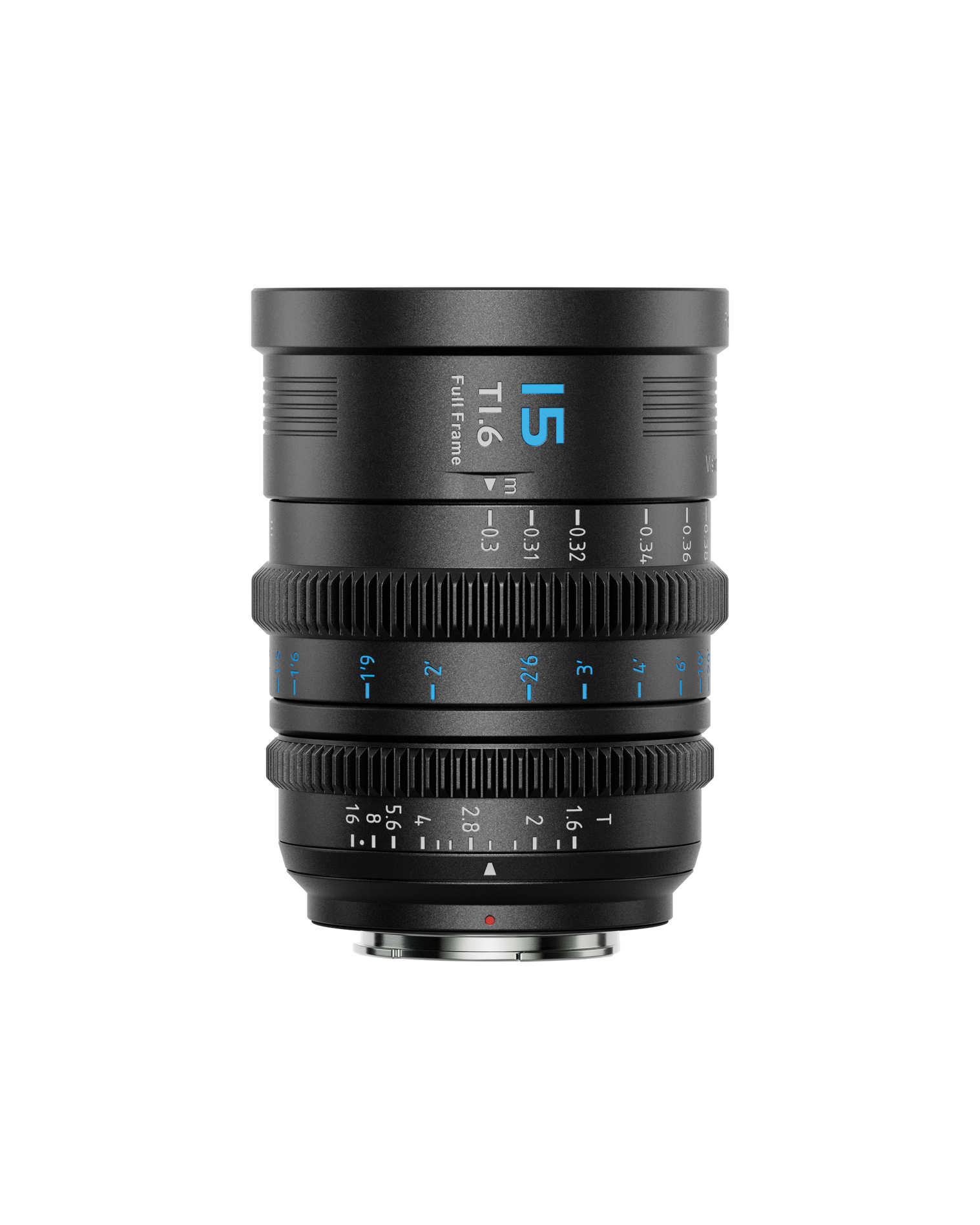
SIRUI Vision Prime 15/75/150mm T1.4 Full-Frame Cine Lens
- 46mm Image Circle for Full-Frame Sensors
- Ultrafast T1.4 Maximum Aperture
- Native E Mount; L, Z, and RF Adapters
- 12-Blade Aperture Delivers Smooth Bokeh
- Compact Aspherical Lens Componentsh
