


If you've searched "full frame lens on medium format camera," you've probably run into a wall of conflicting answers. On paper, it shouldn't work — a full-frame lens is built for a smaller sensor than Fujifilm GFX. Yet quite a few shooters have used the SIRUI IronStar on GFX bodies without running into vignetting. So what's actually going on?
The short answer: it's not really a "full-frame lens vs. medium format" problem. It's an image circle problem — and the SIRUI IronStar Anamorphic Cine Lens Series were designed with a bigger one than most.
What "Full-Frame Lens" Actually Means — And Why It's Misleading
Full-frame lens ≠ full-frame-sized image circle
The label "full-frame lens" describes the sensor format a lens is marketed for, not the physical size of the image it projects. Every lens casts a circular image — the image circle — onto the sensor plane, and the sensor only captures a rectangle cut out of that circle. Most full-frame lenses are engineered to make that circle just barely bigger than a full-frame sensor's diagonal, because going bigger adds size, weight, and cost with no benefit on that camera. So, "full-frame lens" really just means "image circle sized for full-frame" — nothing more. That distinction is the whole reason IronStar can step outside its own category.
Full-Frame vs Medium Format: Sensor Size and Image Circle
Fujifilm GFX sensor size vs standard full-frame — why coverage falls short
A standard full-frame sensor measures roughly 36 × 24mm, with a diagonal near 43.3mm — so most full-frame optics (Sony GM, Canon RF L, Nikon S, and similar lines) target an image circle around 44mm. That's enough for their own format, with almost no room to spare. Fujifilm GFX cameras are a different story. The GFX100 II sensor measures approximately 43.8 × 32.9mm, with a diagonal of about 54.8mm. To cover that fully, a lens would theoretically need an image circle close to 55mm — over 10mm larger than what typical full-frame lenses provide. That gap is why most full-frame glass shows heavy vignetting or hard mechanical cropping when adapted to GFX.
SIRUI IronStar's 46mm image circle — and why it doesn't need to hit 54.8mm
SIRUI publishes IronStar's image circle at 46mm — noticeably larger than the ~44mm norm for full-frame lenses, and SIRUI markets it as covering "full-frame and even large-format cameras." That's still short of the GFX sensor's full 54.8mm diagonal on paper. But two things about how GFX is actually used in video, plus IronStar's own design as an anamorphic lens, close that gap in practice — which is exactly what the next section breaks down.

Can a Full-Frame Lens Cover Medium Format? Three Reasons IronStar Works
GFX video modes don't use the full sensor (Open Gate, 16:9, DCI, 2.39:1)
Very few video workflows on GFX bodies actually use the entire 43.8 × 32.9mm sensor area. Formats like Open Gate, 16:9, DCI, and 2.39:1 all crop into the sensor rather than reading it edge to edge, and anamorphic shooting crops further still. The practical result: the area a lens actually needs to cover on a GFX camera recording video is meaningfully smaller than the theoretical 54.8mm diagonal — often small enough for a 46mm image circle to handle comfortably.
IronStar is an anamorphic lens — desqueeze crops the frame further
IronStar is a 1.5x full-frame anamorphic lens, and anamorphic optics aren't designed like standard spherical glass. Footage is typically captured in a squeezed format — 6:5, 3:2, or Open Gate — then desqueezed by 1.5x in post to arrive at a wide, cinematic 2.39:1 output. Because that final frame is so much wider than it is tall, the extreme corners of the sensor simply never make it into the delivered image. Even if IronStar's 46mm image circle technically falls short of covering the sensor's absolute corners, those corners were never part of the shot to begin with.
SIRUI's own "large format compatible" design claim
SIRUI doesn't treat this as an accident. The IronStar spec sheet explicitly lists a 46mm image circle and describes the lens as large format compatible, with no vignetting and no cropping within its intended shooting modes. That's a deliberate design decision — IronStar was built from the start with more coverage headroom than a typical full-frame lens needs, specifically so it could stretch beyond its native format.
SIRUI IronStar on GFX100 II — No Vignetting, No Cropping
Why real-world tests show clean results
In practice, shooting IronStar on the GFX100 II in Open Gate and cropping down to a 2.39:1 anamorphic output leaves plenty of margin — the corners that would theoretically fall outside a 46mm image circle simply aren't part of the final frame. Reviewers and early adopters shooting handheld run-and-gun setups, product close-ups, and wide establishing shots have reported consistent, even illumination corner to corner, with no visible falloff or need to punch in during post.
Final Thoughts
SIRUI IronStar working cleanly on Fujifilm GFX cameras isn't a loophole or a lucky coincidence — it's the result of a larger-than-average 46mm image circle meeting a shooting workflow (anamorphic, cropped video formats) that never asks the lens to cover the sensor's full corners in the first place. Understanding image circle, rather than just the "full-frame" label, is the key to knowing when a lens like this can cross formats without compromise.
FAQ
Is IronStar a medium format lens?
No. IronStar is designed and marketed as a full-frame anamorphic cine lens. Its 46mm image circle is larger than typical full-frame optics, which happens to give it enough coverage for certain medium format workflows — but that doesn't make it a medium format lens by design or intent.
Can I use IronStar on other medium format cameras besides GFX?
The same principles apply to other medium format bodies, but actual results depend on that camera's sensor size, its video crop modes, and whether you're shooting in a cropped or anamorphic format. Always check whether the specific recording mode reads more of the sensor than GFX's common video crops do.
Will I get vignetting if I shoot Open Gate on GFX100 II?
In most real-world tests, no — because even Open Gate on GFX100 II doesn't demand image circle coverage all the way out to the sensor's full 54.8mm diagonal, and IronStar's 46mm image circle comfortably covers the area actually used. Results can vary slightly by focal length, so it's worth test-shooting your specific setup before a paid job.
Does the 46mm image circle work with anamorphic desqueeze at all focal lengths in the IronStar set?
IronStar's 46mm image circle gives it more coverage headroom than typical full-frame lenses, and that headroom carries across the whole IronStar set. That said, always confirm coverage at your specific focal length and crop mode, since corner behavior can vary slightly from lens to lens within a set.
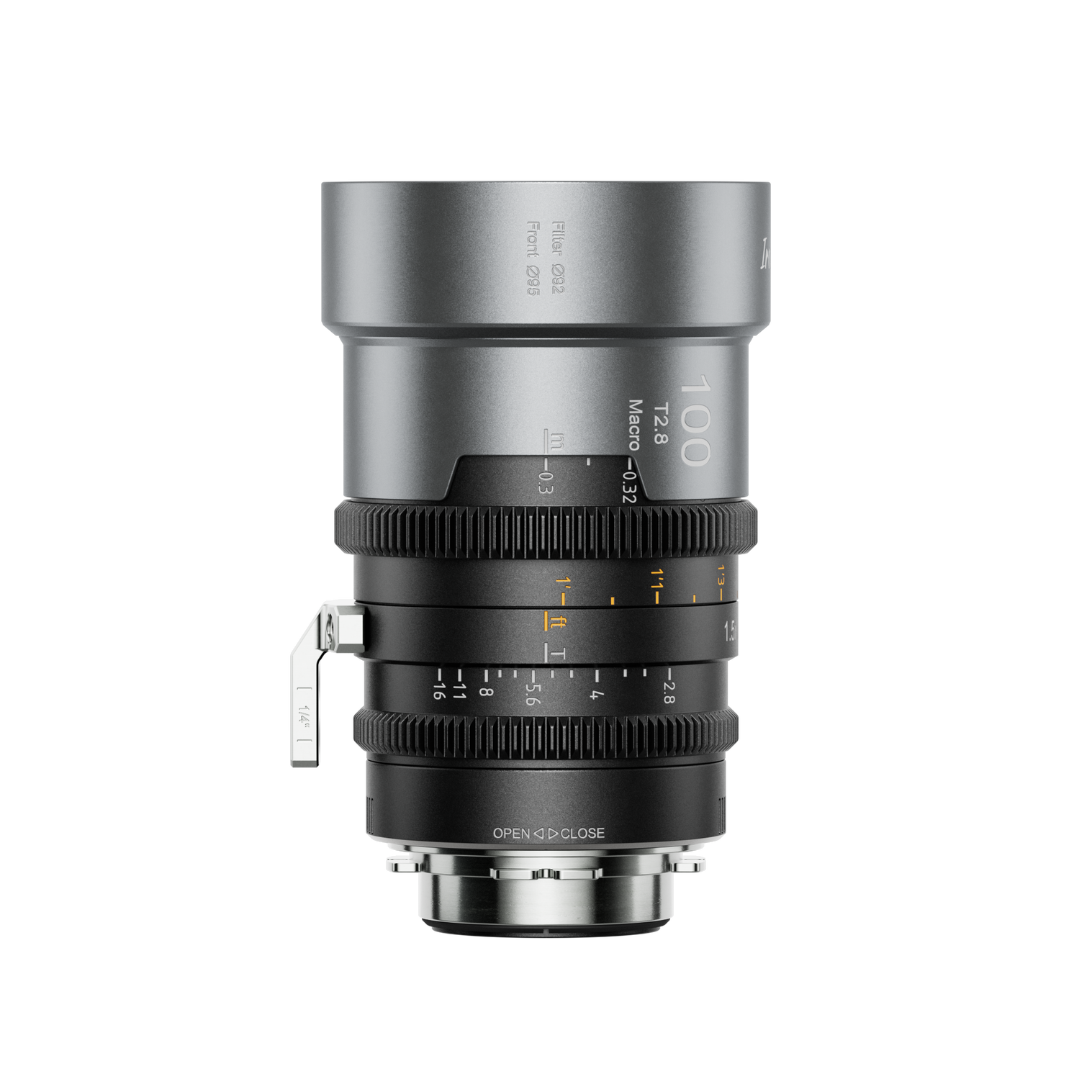
SIRUI IronStar T1.9 1.5x Full-Frame Anamorphic Cine Lens
- Full-Frame | T1.9 to T16
- 1.5x Anamorphic Lens, Neutral Flares
- 0.8 MOD Gears/270° Focus Rotation
- 95mm Front Outside Diameter
- Interchangeable PL/EF Lens Mount

