


Concert photography is one of the toughest low-light challenges a photographer can face. Stage lighting swings from near-total darkness to blinding spotlights in seconds, performers move constantly, and there's rarely a second chance to reshoot a moment. Getting clean, sharp images in these conditions comes down to one thing more than any camera body: the lens. This is where the SIRUI Night Walker earns its place as a serious option for anyone shooting live music.
Why Low Light Performance Matters for Concert Photography
Most venues are dim outside the direct throw of a spotlight, and that inconsistency is what makes concert photography so demanding. Push your ISO too high to compensate and you're left fighting noise and lost detail. This is exactly why a genuinely capable low light lens matters more here than in almost any other genre — it lets you keep your ISO in a usable range while still freezing motion under a spotlight or holding detail in a dim crowd shot.
A lens built around a fast aperture doesn't just let in more light — it changes what's possible. Fast shutter speeds stay within reach even in a dark room, movement stays sharp instead of smeared, and the sensor doesn't have to work as hard to produce a clean image.
What Is a Cine Lens — And Why It Suits Live Music Shooting
If you're new to the category, a cine lens is built specifically for video work: consistent color and geometry across a lens set, de-clicked aperture rings for smooth exposure changes mid-shot, and mechanical focus/iris gears positioned for follow-focus rigs. It's a different design philosophy from a standard photo prime lens, which prioritizes autofocus speed and compactness over consistency across a series.
For live music, this matters because you're often shooting both video and stills in the same set, sometimes switching focal lengths between songs. A prime lens vs zoom lens debate usually comes down to speed and image quality versus flexibility — and in a genre where light is scarce, the faster glass of a prime almost always wins out. The SIRUI Night Walker Series takes that same cine-lens design language — shared gear positions, consistent color rendering, uniform size — and builds it around one of the fastest apertures available in this class.
Inside the SIRUI Night Walker's T1.2 Aperture Design
Understanding what is aperture in photography helps explain why this lens works so well in a concert setting: the aperture is the opening that controls how much light reaches the sensor, and a wider opening (a lower T-stop or f-stop number) lets in dramatically more light. That's what does aperture do in practical terms — it's the single biggest lever you have when the environment itself is dark and unchangeable.
The Night Walker series is built around an ultrafast T1.2 maximum aperture across all five focal lengths (16mm, 24mm, 35mm, 55mm, 75mm). That speed means you can shoot a dim venue without pushing your ISO into noisy territory, keeping night scenes clean and detailed rather than grainy. The wide aperture also produces pleasing background blur, helping isolate a performer from a cluttered stage or crowd. Aspherical and ED glass elements are built in specifically to maintain sharpness even wide open at T1.2, so you're not trading light-gathering ability for softness.

Built for Fast-Paced Shooting — Design and Handling
Concert photography rewards speed. You need to react to a performer moving across the stage, change framing quickly, and sometimes swap lenses between songs without missing the next moment. The Night Walker series shares consistent focus and iris gear ring positions across every focal length in the set, so switching lenses mid-shoot doesn't mean re-adjusting your rig or follow-focus setup each time.
The lens body itself is compact and lightweight — aluminum alloy construction protects the internal optics while keeping the housing manageable for handheld shooting over a full set. A stepless aperture ring lets you adjust exposure smoothly mid-shot, which matters when stage lighting shifts without warning between a ballad's single spotlight and a full-band chorus.
Choosing the Right Focal Length for the Venue
The Night Walker series spans five focal lengths, and venue size generally dictates which one earns the most use:
-
16mm — wide stage shots, capturing the full band or a packed crowd from a photo pit
-
24mm — versatile mid-wide framing, good for environmental shots that include the stage setup
-
35mm — a natural documentary-style focal length for general coverage
-
55mm — tighter framing on a single performer without losing working distance
-
75mm — reaching a performer from further back in larger venues
Tips for Shooting Concerts with the Night Walker
-
Pre-focus on marked positions. Performers often return to the same spot on stage (center mic, front of the runway) — pre-set your focus there so you're ready the instant they arrive.
-
Ride the stepless aperture ring. Rather than only adjusting shutter speed, use small aperture adjustments to handle sudden lighting changes without breaking your shot.
-
Shoot wide open when the light drops. Don't be afraid to use the full T1.2 aperture during the darkest parts of a set — this is exactly the scenario it's designed for.
-
Use the wider focal lengths for band shots, longer ones for portraits. Switching quickly is easier since gear positions stay consistent across the set.
FAQ
What is the best lens for concert photography in low light?
A lens with a fast, wide aperture is essential for concert photography, since venue lighting is inconsistent and often very dim. The SIRUI Night Walker's T1.2 aperture across all five focal lengths makes it well suited to this kind of shooting.
What is a cine lens, and why use one for music shows?
A cine lens is designed for video work, with features like de-clicked aperture rings and consistent gear positions across a lens set. For live music, where you may shoot both stills and video across multiple songs, that consistency and smooth exposure control are especially useful.
Does the SIRUI Night Walker handle changing stage lighting well?
Yes — the stepless aperture ring allows for smooth, on-the-fly exposure adjustments, which is useful when stage lighting shifts suddenly between quieter and louder moments in a set.
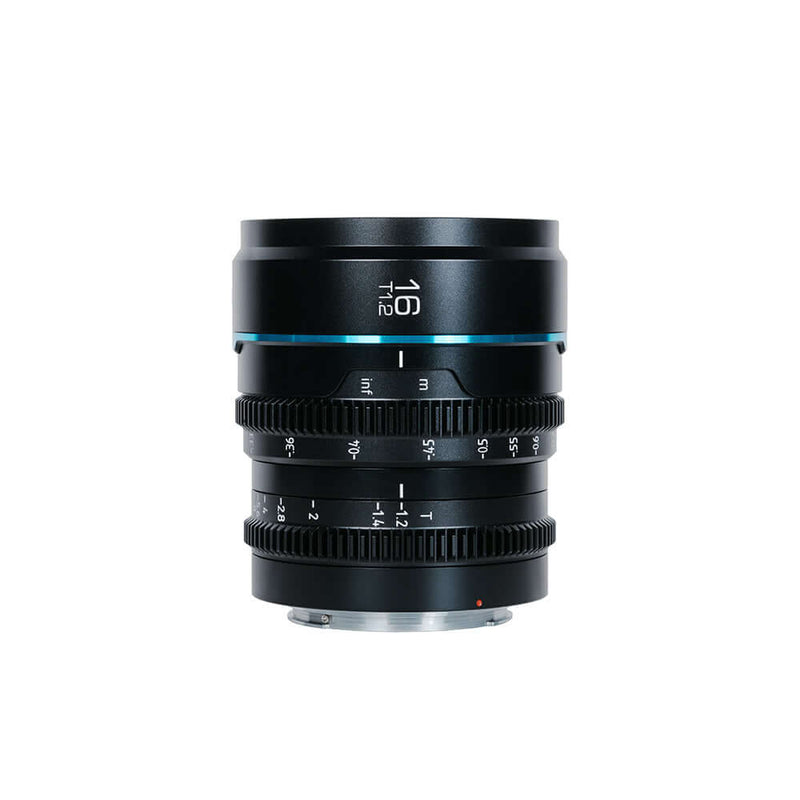
SIRUI Night Walker T1.2 S35 Frame Cine Lens Series
- Deckt Super35/APS-C Sensoren ab
- 1.5 x Anamorphic Lens, Neutral Flares
- 32 mm Bildkreis
- Kompaktes, leichtes Design
- 12-Blatt Blende, Sanftes Bokeh

