


Christopher Frost, a camera reviewer with over 373,000 subscribers on YouTube, previously reviewed SIRUI's APS-C anamorphic lenses and recently spent time with the brand's next step: the Astra series, SIRUI's first full-frame anamorphic lenses with autofocus. The set covers three focal lengths — 50mm, 75mm, and 100mm, all at T1.8 — and Frost shot with each one individually before comparing notes across the set. Here's what stood out.
What Is the SIRUI Astra Series?
The Astra series is a set of three T1.8, 1.33x anamorphic lenses — 50mm, 75mm, and 100mm — built for full-frame video cameras with working autofocus.
The lenses extend SIRUI's anamorphic autofocus concept, first seen on APS-C optics, to full-frame coverage. Each uses a 1.33x squeeze ratio, stretching the image vertically in-camera so it can be unsqueezed horizontally in post for a widescreen aspect ratio with better resolved detail than cropping alone. The set ships with a choice of blue or neutral flare coatings, carries a three-year warranty, and is available for L-mount, Nikon Z, and Sony E-mount bodies. Mount options and flare style aside, the three lenses share the same external design and control layout, which made it straightforward for Frost to move between them.
How Well Does Autofocus Work on the Astra Lenses?
Autofocus works reliably across all three lenses when the camera's AF speed is set low — around level three of seven worked best on a Sony A7CR. At faster AF speed settings, focus hunting becomes noticeable, especially on the 75mm and 100mm.
Frost ran extensive autofocus tests on each lens and found a consistent pattern: dial the camera's AF speed down, and the motor tracks smoothly and locks onto the subject without fuss. Push it up toward the top of the range and the system gets jittery — a minor issue on the 50mm, but more pronounced on the 75mm and clearer still on the 100mm, where it looked shaky before settling onto the subject. Since video shooters typically keep AF speed low anyway for a smoother focus pull, Frost didn't treat this as a serious mark against the lenses, but it's worth knowing going in. Autofocus performance across the set also depends on shooting subjects with enough contrast for the system to lock onto — a fairly typical caveat for any autofocus lens.
What Is the Build Quality Like on the 50mm, 75mm, and 100mm?
All three Astra lenses share a tough, metal-bodied construction with a weather-sealing gasket at the rear mount and a USB-C port for firmware updates. Weight increases with focal length, from 620g on the 50mm up to 700g on the 100mm.
Compared with SIRUI's earlier APS-C anamorphic lenses, the Astra series adds a locking mechanism that lets the aperture ring be switched in or out of camera control, along with a clicked or declicked aperture ring for photo or video work. Both the aperture ring and the manual focus ring carry deep grooves for follow-focus rigs. The manual focus ring is a linear, electronic (focus-by-wire) design with hard stops and printed markings, which Frost found genuinely useful for repeatable manual pulls — though switching from autofocus to manual doesn't preserve the current focus position, so the lens resets rather than holding where autofocus left it. One quirk noted across all three lenses: shooting within about a meter of a subject introduces a slight, unintended wobble in the manual focus ring, which Frost suspects is a bug that firmware could address. None of the three lenses include a hood, and none feature image stabilization. All three use a 72mm filter thread.
How Sharp Are the SIRUI Astra Lenses?
Center sharpness improves noticeably as each lens is stopped down from T1.8, with the 75mm delivering the sharpest results of the three and the 100mm the softest overall. Corner sharpness on all three lenses stays soft wide open and only firms up several stops down, which is typical for anamorphic optics.
| 50mm T1.8 | 75mm T1.8 | 100mm T1.8 | |
|---|---|---|---|
| Center sharpness at T1.8 | Good, with magenta fringing | Soft | Soft |
| Center sharpness sweet spot | T2.8–T4 | T2.8 | T2.8 |
| Corner sharpness | Needs T11 for corner-to-corner detail | Strong from T4–T5.6 | Needs T8, with some fringing |
| Minimum focus distance | 50cm | 60cm | 70cm |
| Weight | 620g | 650g | 700g |
Across the set, Frost also noted a consistent pin-cushion distortion at the frame edges and vignetting that's strongest wide open and eases by T2.8–T4, both common traits of anamorphic design rather than issues specific to Astra. Close-focus image quality follows the same pattern as general sharpness on each lens — softer near minimum focus distance at T1.8, firming up a stop or two down. Of the three, the 75mm came out as the sharpest overall, edging out the 50mm, while the 100mm was, in Frost's words, optically the weakest of the set.
What Do Bokeh, Flare, and Color Rendering Look Like?
All three Astra lenses produce strong horizontal flares and softly elliptical bokeh, the signature look most anamorphic shooters are after. Longitudinal chromatic aberration is visible through around T4 on each lens and clears up by T5.6–T8.
Frost described the horizontal flare as a clear highlight of the series — pronounced and distinctive, though admittedly an acquired taste that won't suit every project. Shooters who'd rather tone it down can choose the blue-flare version instead of the neutral one. Out-of-focus backgrounds render with a subtle elliptical shape and a soft character that Frost felt helped footage stand out, a quality that held consistent across all three focal lengths despite the differences in sharpness.


Which SIRUI Astra Lens Is Right for You?
For shooters who want the sharpest optic in the set alongside the anamorphic look and working autofocus, Frost's own pick was the 75mm — it offered the best balance of center and corner sharpness. The 100mm delivers the same flare and bokeh character but trails the other two on optical performance, while the 50mm sits in between with slightly stronger corner softness that clears up by T11.
None of the three lenses are aimed at shooters chasing clinical, pin-sharp cinema glass — that's not really what anamorphic lenses are built for. They're aimed at video makers who want a distinctive, stylized look and are willing to trade some corner sharpness and control over flare for it, while still keeping autofocus in the kit.
Final Thoughts
Across all three focal lengths, the SIRUI Astra series delivers on its core promise: full-frame anamorphic character with autofocus that actually works, provided the camera's AF speed is kept on the lower end. Build quality is solid and clearly improved over SIRUI's earlier APS-C anamorphic lenses, with useful additions like the lockable aperture ring and weather sealing. Optically, expect the usual anamorphic trade-offs — soft corners wide open, some vignetting and chromatic aberration, and a moderate amount of focus breathing — with the 75mm standing out as the sharpest of the three and the 100mm as the softest. For video makers who want a stylized, flare-heavy look without giving up autofocus, the Astra series is a reasonable option to have on the shortlist.
FAQ
What focal lengths are available in the SIRUI Astra series?
The Astra series includes three T1.8 anamorphic lenses: 50mm, 75mm, and 100mm, all built for full-frame cameras.
Does the SIRUI Astra series have autofocus?
Yes. Each Astra lens has working autofocus, though performance is best when the camera's AF speed is set to a lower level rather than the fastest setting.
Which camera mounts are the SIRUI Astra lenses available for?
The Astra series is available for L-mount, Nikon Z, and Sony E-mount cameras.
What is the squeeze ratio on the SIRUI Astra lenses?
All three lenses use a 1.33x anamorphic squeeze, stretching the image vertically for widescreen output after unsqueezing in post.
Is there a hood or image stabilization included with the Astra lenses?
No. None of the three Astra lenses ship with a hood, and none feature built-in image stabilization.
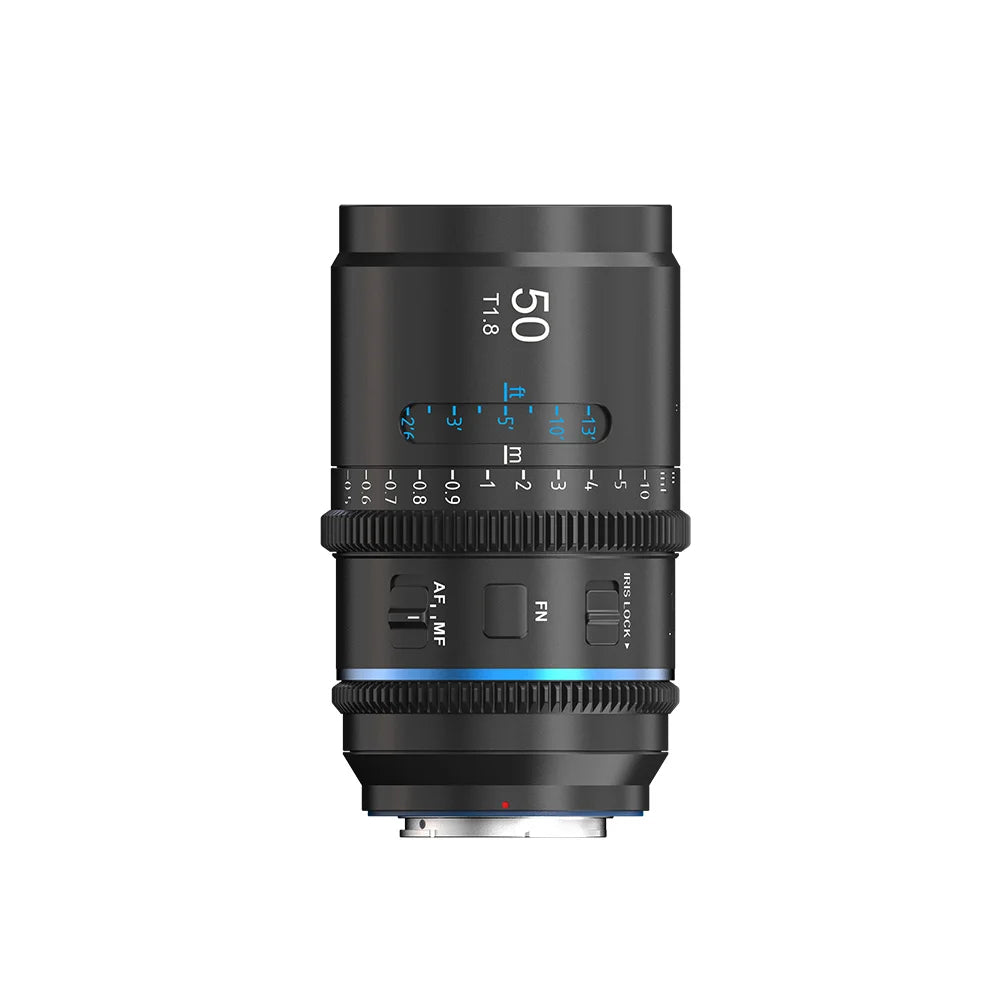
SIRUI Astra T1.8 1.33x Full-Frame Autofocus Anamorphic Cine Lens
- Covers Full Frame | T1.8-T22 Aperture
- Selectable Manual and Autofocus
- Neutral Streak Flares
- 2.4:1 Aspect Ratio, No Cropping
- Oval Bokeh, Vertical Background Stretch

