


If you've ever zoomed into a photo and noticed a thin blue, green, or purple outline along a high-contrast edge, you've seen chromatic aberration in action. It's one of the most common optical flaws in photography and cinematography, and understanding why it happens—and how it's engineered out of a lens—can change the way you think about your gear.
What Is Chromatic Aberration?
Chromatic aberration, also called color aberration or color fringing, happens when a lens fails to focus every wavelength of light onto the same point. Because glass bends different colors of light at slightly different angles, the red, green, and blue channels can land on slightly different focal planes, producing visible color fringes—especially along edges where light meets dark, like a tree branch against a bright sky.
This isn't a flaw unique to cheap lenses. Every optical element bends light differently depending on wavelength, a property called dispersion. The difference lies in how well a lens is engineered to compensate for it.
What Are the Different Types of Chromatic Aberration?
There are two main types worth knowing. Lateral (or transverse) chromatic aberration appears as color fringing toward the edges of the frame and is common in wide-angle lenses. Axial (or longitudinal) chromatic aberration shows up as color haloing in front of and behind the focal plane, and it's more common in fast lenses shot at wide apertures.
Lateral chromatic aberration tends to worsen at shorter focal lengths, where light rays strike the lens elements at steeper angles. Axial chromatic aberration, on the other hand, is closely tied to aperture—wide-open shooting at T1.4 or faster puts far more strain on a lens's ability to keep every wavelength in focus at once. This is exactly the territory where cinema prime lenses live, and why optical correction matters so much for fast-aperture glass.

How Does the SIRUI Vision Prime Lens Design Prevent Chromatic Aberration?
Controlling chromatic aberration starts with glass selection and lens architecture, not with post-production. The SIRUI Vision Prime cine lens series is built around three optical elements specifically chosen to manage color dispersion and deliver clean, accurate images straight out of the lens.
The series uses aspherical lens elements, which help reduce overall lens weight while controlling both chromatic aberration and chromatic dispersion—two of the biggest contributors to color fringing in fast cine primes. Alongside this, ED (Extra-low Dispersion) glass is used to keep colors accurate and images sharp, directly addressing the wavelength-focusing problem that causes fringing in the first place. Finally, HRI (High Refractive Index) glass reduces stray light and improves light transmittance, which helps preserve contrast and color fidelity even in demanding lighting conditions.
Together, these three elements form the foundation of what SIRUI calls its "Outstanding Image Quality" design philosophy across the Vision Prime lineup, spanning focal lengths from 15mm to 150mm. For cinematographers shooting fast cine prime lenses at T1.5 or wider, this kind of in-lens correction matters far more than any amount of fixing in post—because once fine detail is lost to fringing, it's difficult to fully recover in the edit.
| Optical element | What it does | 15mm T1.6 | 75mm T1.4 | 150mm T4 (Macro 1.5X) |
| Aspherical Lens | Reduces weight, controls chromatic aberration and chromatic dispersion | 3 | 1 | / |
| ED Glass | Delivers sharp images with accurate color | 1 | 1 | 3 |
| HRI Glass | Reduces stray light and improves light transmittance | 4 | 4 | 3 |
How Can You Avoid Chromatic Aberration While Shooting?
Even with a well-corrected cinematic lens, a few shooting habits can help minimize color fringing further. Stopping down slightly from your widest aperture reduces the strain on the lens's optical correction, since axial chromatic aberration is most pronounced wide open. Avoiding the extreme wide-angle end of a zoom, or choosing a prime lens in a moderate focal length, also reduces lateral fringing, since edge distortion tends to increase at shorter focal lengths.
High-contrast scenes—dark subjects against bright skies, metallic surfaces catching direct light, or backlit silhouettes—are where chromatic aberration is most visible, so it's worth paying extra attention to lens correction settings or shooting RAW when these conditions come up. A well-built cine prime lens with strong optical correction, like the SIRUI Vision Prime series, does much of this work for you before you ever open an editing timeline.
Final Thoughts
Chromatic aberration is a fundamental optical challenge that every lens has to manage, but not every lens manages it the same way. The difference between a lens that fringes badly wide open and one that stays clean comes down to glass selection and design choices made long before the lens ever ships. SIRUI's Vision Prime series was built with exactly this problem in mind, combining aspherical elements, ED glass, and HRI glass to keep images sharp, color-accurate, and free of distracting fringing—even in demanding cinema work.
FAQ
Is chromatic aberration the same as color fringing? Yes, chromatic aberration and color fringing describe the same phenomenon—colored outlines appearing along high-contrast edges due to a lens's inability to focus all wavelengths of light at the same point.
What's the difference between lateral and axial chromatic aberration?
Lateral chromatic aberration appears toward the edges of the frame and is linked to focal length, while axial chromatic aberration shows up as haloing in front of and behind the focal plane and is closely tied to aperture.
Can chromatic aberration be fixed in post-production?
Software like Lightroom or DaVinci Resolve can reduce mild chromatic aberration, but heavy fringing—especially axial aberration from fast apertures—is difficult to fully correct after the fact, which is why in-lens optical correction matters.
Does a faster aperture make chromatic aberration worse?
Yes. Wide apertures like T1.4 or faster place more demand on a lens's optical design, making axial chromatic aberration more likely without strong internal correction like ED and aspherical elements.
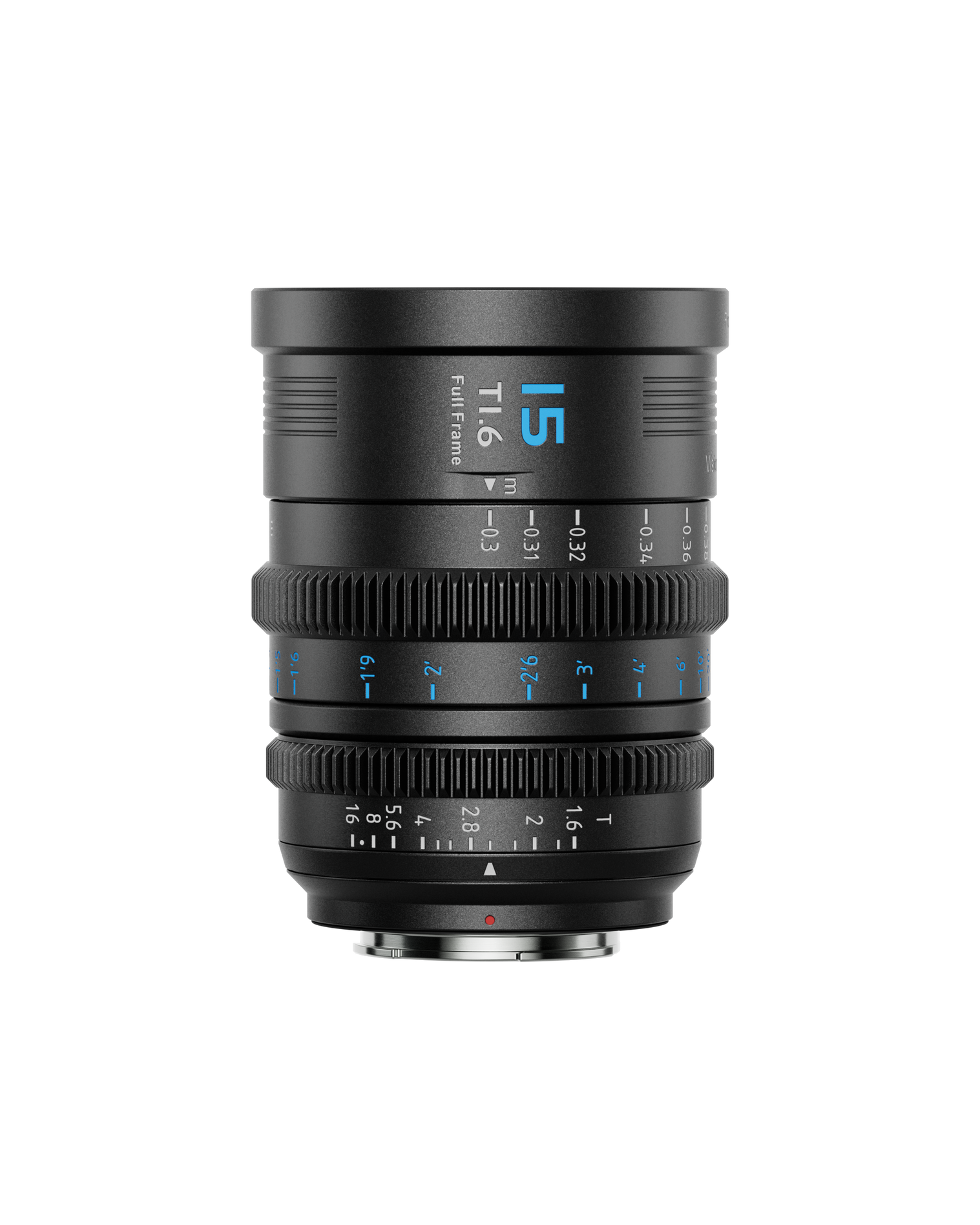
SIRUI Vision Prime 15/75/150mm T1.4 Full-Frame Cine Lens
- 46mm Image Circle for Full-Frame Sensors
- Ultrafast T1.4 Maximum Aperture
- Native E Mount; L, Z, and RF Adapters
- 12-Blade Aperture Delivers Smooth Bokeh
- Compact Aspherical Lens Componentsh

